The hemp beverage category sits at the intersection of federal agricultural law, state alcohol regulation, and cannabinoid policy that is now moving fast in one direction. For brands, distributors, and retailers, understanding how these products move through the supply chain — and what happens on November 12, 2026 — is essential for making sound decisions in the months ahead.
November 12, 2026
The hemp provisions of P.L. 119-37, the FY2026 Agriculture Appropriations Act (signed November 12, 2025), take effect on this date. The federal definition of hemp narrows to 0.3% total THC on a dry-weight basis — counting THCA and delta-8 — and finished hemp-derived cannabinoid products are capped at 0.4 mg total THC per container. Typical hemp beverages carry 2.5–10 mg per can, so essentially every intoxicating hemp beverage on the market today becomes federally unlawful as formulated. Three pending bills could change the picture — a delay to 2028 (Hemp Planting Predictability Act), a regulatory framework with a 10 mg-per-container beverage limit (Cannabinoid Safety and Regulation Act), and the Lawful Hemp Protection Act — but none is law as of July 2026. Start with the Congressional Research Service explainer, then see what changes below.
Free Download
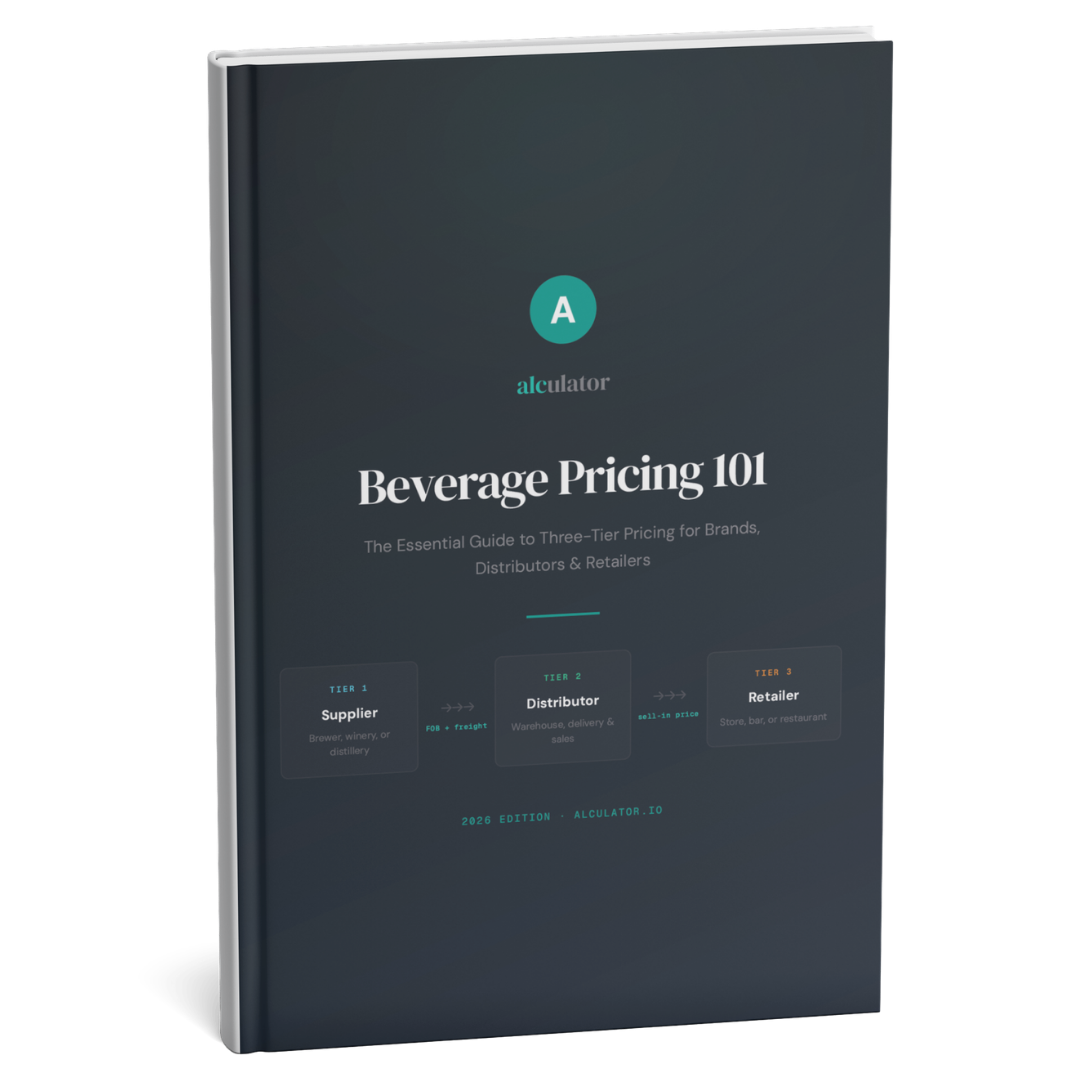
Beverage Pricing 101
The complete guide to three-tier pricing — margins, formulas, and benchmarks in one PDF.
No spam. Unsubscribe anytime.
Downloading your guide!
The 2018 Farm Bill and the birth of hemp beverages
The Agriculture Improvement Act of 2018, commonly known as the 2018 Farm Bill, removed hemp from the Controlled Substances Act and reclassified it as an agricultural commodity. The bill defined legal hemp as cannabis sativa with no more than 0.3% delta-9 concentration on a dry-weight basis. This single legislative change created the legal foundation for an entirely new beverage category.
Before the Farm Bill, any cannabis-derived ingredient in a beverage would have been federally illegal. After the bill passed, manufacturers could legally extract cannabinoids from compliant hemp plants and formulate them into consumer products, including beverages. The market responded quickly. By 2023, hemp-derived beverages had emerged as a significant segment, and by 2025 the category was generating hundreds of millions in annual retail sales across the United States.
However, the Farm Bill created a legal category without creating a complete regulatory framework. The bill left the FDA to regulate hemp-derived products as food and dietary supplements, but the agency was slow to issue comprehensive guidance for ingestible cannabinoids. That regulatory gap left states to develop their own rules — a complex, sometimes contradictory, patchwork that hemp beverage brands navigated market by market for seven years. In November 2025, Congress closed the gap from above by rewriting the federal definition of hemp itself.
The November 12, 2026 federal deadline: what changes
On November 12, 2025, the President signed P.L. 119-37, the FY2026 Agriculture Appropriations Act. Its hemp provisions take effect one year later, on November 12, 2026. Three changes matter for beverages:
- Total THC standard: the federal definition of hemp narrows from 0.3% delta-9 THC to 0.3% total THC on a dry-weight basis, counting THCA, delta-8, and other forms of THC.
- Per-container cap: finished hemp-derived cannabinoid products are additionally capped at 0.4 mg total THC per container. This is the provision that ends the intoxicating hemp beverage category as currently formulated — typical products carry 2.5–10 mg per can, an order of magnitude over the cap.
- Synthesized cannabinoids excluded: cannabinoids synthesized outside the plant are excluded from the hemp definition entirely, closing the conversion pathway many delta-8 products rely on.
The U.S. Hemp Roundtable estimates that roughly 95% of existing hemp-derived cannabinoid products become federally unlawful under the new definition — including essentially every intoxicating hemp beverage on the market today. For the clearest single-page summary of the law, read the Congressional Research Service explainer.
The pending relief bills — not law as of July 2026
Three bills in Congress could soften or replace the deadline. None has passed:
- Hemp Planting Predictability Act (Rep. Baird, bipartisan): would delay the effective date to November 2028, giving the industry and regulators two more years.
- Cannabinoid Safety and Regulation Act (Senate): would replace prohibition with a regulatory framework — 5 mg THC per serving and 50 mg per container for edibles, with a 10 mg per-container limit for beverages.
- Lawful Hemp Protection Act (Rep. Barr, introduced May 28, 2026).
Any of these could move; all of them could stall. Congress has attached hemp language to must-pass spending bills before — that is how the current deadline became law — and could do so again. The honest planning posture is to treat November 12, 2026 as real until the day it is not. A brand that bets its inventory on a delay bill is making a legislative wager, not a business plan.
Hemp beverage types: a critical distribution distinction
Not all hemp beverages are created equal from a distribution perspective. The cannabinoid profile of a product fundamentally determines how it is regulated, where it can be sold, and which distribution channels are available.
CBD beverages
Beverages containing cannabidiol (CBD) without intoxicating cannabinoids are generally treated as functional beverages or dietary supplements. In most states, these products can be distributed through conventional food and beverage channels without requiring alcohol distribution licenses. CBD beverages are typically sold in natural grocery stores, wellness retailers, convenience stores, and online — often through the same distributors that handle kombucha, functional waters, and other specialty non-alcoholic drinks.
Intoxicating hemp beverages
Beverages containing intoxicating cannabinoids face significantly more complex distribution requirements. Many states have determined that these beverages should be regulated similarly to alcohol, requiring age verification at the point of sale and, in some cases, distribution through licensed alcohol distributors. Other states have created entirely new licensing categories specific to hemp-derived products, and a growing number have banned intoxicating hemp products outright. These are also the products squarely in the path of the federal deadline: at typical potencies of 2.5–10 mg per can, they exceed the incoming 0.4 mg per-container cap many times over.
The Dry-Weight Loophole (Closing November 12, 2026)
The 2018 Farm Bill’s 0.3% limit was measured on a dry-weight basis, not by total volume. Because beverages are mostly water, a 12oz can could carry several milligrams of THC while staying far under the threshold — the loophole the entire intoxicating hemp beverage category was built on, which states countered with their own per-serving and per-container potency caps. P.L. 119-37 closes it at the federal level: from November 12, 2026, finished products are capped at 0.4 mg total THC per container regardless of the dry-weight math. Treat the loophole as historical context, not current formulation advice.
State-by-state regulatory landscape
Even before the federal deadline, every state had taken its own approach to hemp beverages — and the November 2026 cap is accelerating the divergence rather than resolving it. Some states are banning ahead of the federal schedule, some are folding THC beverages into their licensed cannabis systems, and some are running an alcohol-style model that federal legislators cite as the alternative to prohibition. As of mid-2026, three verified reference points define the spectrum.
| Regulatory Approach |
How It Works |
Verified Example |
| Categorical ban |
Intoxicating hemp products are prohibited outright, ahead of and independent of the federal deadline. |
Ohio — SB 56, enacted December 2025 |
| Cannabis-channel absorption |
THC beverages are channeled into the state’s licensed cannabis framework, with non-compliant inventory required to be liquidated. |
New Jersey |
| Alcohol-aligned regulation |
Hemp beverages are sold through alcohol-style licensing with age verification, potency caps, and testing — the model federal legislators cite as the alternative to prohibition. |
Minnesota |
| Unresolved / in flux |
Legislatures and regulators are still deciding how — or whether — to act before November 2026. Verify current status before committing inventory. |
Most other states |
A word of caution on older category maps: guides written before late 2025 often listed states like Texas or Florida as “lightly regulated” and described frameworks like California’s as “proposed.” Treat those labels as unverified — this landscape is moving monthly ahead of the federal deadline, and a status that was accurate last quarter may be wrong today. There is no substitute for checking the current statute and pending bills in every state where you sell.
This fragmentation means that a hemp beverage brand cannot simply sign with a national distributor and expect uniform market access. Each state requires its own compliance analysis, and the appropriate distribution partner in one market may be entirely wrong for another. A brand selling through an alcohol wholesaler in Minnesota might face a dispensary-only path in New Jersey and be shut out of Ohio entirely.
Brands entering multiple states simultaneously should work with legal counsel who specialize in cannabinoid regulation and build a state-by-state distribution plan rather than assuming a single national strategy will work. For a deeper look at how state alcohol regulations vary and why they matter for pricing, see our dedicated guide. Brands competing in the broader ready-to-drink space should also understand how RTD distribution regulations differ based on whether a product is malt-based or spirit-based, since these classifications affect which distribution channels are available.
Pricing implications unique to hemp beverages
Hemp beverages carry a fundamentally different cost structure than traditional alcohol or conventional non-alcoholic drinks. Understanding these differences is critical for setting FOB prices that support a viable business while landing at shelf prices consumers will accept.
Higher production costs
Hemp-derived cannabinoid extracts are expensive. Nano-emulsification technology — required to make cannabinoids water-soluble and bioavailable in a liquid format — adds significant cost per unit. Third-party testing for potency, pesticides, heavy metals, and microbials is mandatory in most regulated states and adds further expense. The result is that COGS for a hemp beverage typically runs 30–50% higher than a comparable non-alcoholic functional drink and often higher than many craft beer or RTD cocktail products.
Premium positioning and margin expectations
The higher cost structure pushes hemp beverages into premium pricing territory. Most hemp beverages retail between $3.99 and $6.99 per single-serve can, with multipacks ranging from $14.99 to $29.99 depending on format and potency. This premium positioning means that retailers generally expect higher penny profit per unit, even if percentage margins are similar to or slightly below what they achieve on craft alcohol.
Distributors handling hemp beverages often expect margins comparable to or slightly above what they earn on craft spirits — typically 28–35%. The logic is straightforward: hemp products require additional compliance overhead, more intensive retailer education, and carry category risk that established alcohol products do not. Brands that try to negotiate distribution margins significantly below these ranges will struggle to attract quality distribution partners.
FOB pricing for hemp beverages
FOB prices for hemp beverages typically range from $28 to $55 per case for a standard 24-pack of 12oz cans, depending on potency, ingredient quality, and brand positioning. For the emerging 2×9 format (discussed below), FOBs are generally $20 to $38 per case. These FOBs are notably higher per unit than most beer and comparable to or above many RTD spirit cocktails, which places additional pressure on getting the downstream margin math right.
For a detailed explanation of how FOB pricing works and how to set it strategically, see our FOB Pricing Explained guide.
One of the most significant packaging trends in hemp beverages is the rise of the 2×9 format — two 9-packs of slim cans per case, for a total of 18 units. This format has gained rapid adoption for several reasons that are specific to the hemp beverage category.
- Retailer-friendly case size: A case of 18 is easier for smaller retailers to manage than a 24-pack, reducing the inventory commitment required to bring on a new SKU
- Consumer trial at accessible price points: A 9-pack at $19.99–$24.99 offers a compelling trial size between a single can and a full 12-pack, which matters for a category where many consumers are still first-time buyers
- Shelf efficiency: Slim cans in 9-pack configurations fit well in both cooler doors and ambient shelf sets, giving retailers flexibility in where they merchandise the product
- Higher per-unit revenue: The 2×9 format often achieves a higher per-ounce price than 24-pack configurations, supporting the premium positioning that hemp beverage economics require
- Differentiation from beer: The format visually and structurally distinguishes hemp beverages from beer on the shelf, reinforcing that these products are a different category with different usage occasions
Brands evaluating their format strategy should model the margin math for both 24-pack and 2×9 configurations. The per-unit economics differ significantly, and the right format choice can mean the difference between a viable margin stack and one that leaves the brand or distributor underwater.
Compliance requirements for hemp beverage distribution
Compliance is not optional in hemp beverage distribution — it is the cost of entry. Brands that cut corners on compliance risk product seizures, fines, and loss of distribution partnerships. The requirements span several areas.
Labeling
Hemp beverage labels must typically include total milligrams of cannabinoids per serving and per container, a QR code or URL linking to the certificate of analysis (COA) from third-party testing, warnings regarding intoxicating effects, age restrictions, pregnancy, and driving, a statement that the product is derived from hemp and compliant with the 2018 Farm Bill, and standard food labeling elements including nutrition facts, ingredients, allergens, and manufacturer information. Label requirements vary by state, and a label that is compliant in one market may be insufficient in another.
Testing
Most regulated states require batch-level third-party testing for cannabinoid potency (to verify labeled amounts and confirm compliance with legal limits), residual solvents, pesticides, heavy metals (lead, arsenic, cadmium, mercury), and microbial contamination. Test results must be available to regulators and, in many states, to consumers via the product label or QR code. Testing adds $500 to $2,000 per batch depending on the panel required, and this cost must be factored into COGS and ultimately into your FOB.
Potency caps
Many states impose per-serving and per-container potency limits, independent of the federal 0.3% dry-weight rule. Common caps range from 5mg per serving to 10mg per serving, with container limits of 50mg to 100mg. These caps directly affect product formulation, packaging size, and ultimately the value proposition you can offer consumers. A brand that formulates at 10mg per can in one state may need to reformulate at 5mg per can for another, which has obvious implications for production complexity and SKU proliferation.
Age verification
Nearly every state that permits intoxicating hemp beverages requires age verification at the point of sale, typically 21 and over. This requirement has significant distribution implications: it limits the retail channels available (no vending machines, limited self-checkout), requires retailer staff training, and in many states effectively restricts sales to the same licensed retail locations that sell alcohol. For brands pursuing direct-to-consumer sales, age verification adds complexity and cost to the e-commerce fulfillment process.
Compliance Warning
Regulations for hemp beverages are changing faster than at any point in the category’s history. The federal definition of hemp itself changes on November 12, 2026, states are moving monthly in response, and none of the pending relief bills is law. Do not assume that a compliance framework you established last year is still current. Build a quarterly regulatory review into your operations calendar and maintain relationships with legal counsel in every state where you distribute. A compliance failure in one state can trigger scrutiny from regulators in others.
How alcohol distributors are entering the hemp space
The convergence of hemp beverages and the three-tier system is not theoretical — it is happening now. Several of the largest alcohol distributors in the United States have added hemp beverage portfolios or created dedicated divisions to handle the category.
This trend is driven by several factors. Alcohol distributors already have the infrastructure that hemp beverages require: temperature-controlled warehousing, established retail relationships, route-to-market logistics, and experience with age-restricted products. They also see the strategic value in a category that is attracting younger consumers who are drinking less traditional alcohol. For distributors facing flat or declining volume in some alcohol categories, hemp beverages represent incremental growth.
For hemp beverage brands, partnering with an established alcohol distributor offers obvious advantages: immediate retail access, professional sales teams, and credibility with buyers who might otherwise be reluctant to take on an unfamiliar category. The tradeoff is that alcohol distributors bring alcohol-industry margin expectations, minimum volume requirements, and portfolio management practices that may not align with a small or emerging hemp brand's capabilities.
What established distributors look for in hemp brands
- Regulatory compliance: Full documentation including COAs, state-specific label approvals, and demonstrated understanding of every market's requirements
- Proof of consumer demand: Velocity data from existing markets, DTC sales figures, or compelling market research
- Marketing investment: Brands that will invest in consumer awareness, trial programs, and retailer education alongside the distributor's efforts
- Sustainable margin structure: FOB pricing that allows the distributor to earn competitive margins while landing at a shelf price consumers will accept
- Production reliability: Demonstrated ability to fulfill orders consistently, maintain quality, and manage supply chain disruptions
Building a hemp beverage distribution strategy
Given the complexity of the regulatory landscape and the relative immaturity of the category, hemp beverage brands need a more deliberate approach to distribution strategy than most alcohol brands require.
Start with your strongest markets
Rather than pursuing national distribution immediately, identify the three to five states where your regulatory position is strongest, consumer demand signals are clearest, and distribution partnerships are most accessible. Build depth in those markets before expanding. A brand with strong velocity in five states is far more attractive to distributors in new markets than a brand with thin, scattered distribution across twenty.
Match the channel to the regulation
In alcohol-aligned states, pursue alcohol distribution partnerships. In lightly regulated states, consider specialty DSD distributors, direct store delivery through your own team, or partnerships with natural and specialty food distributors. In states with separate hemp licenses, work with distributors who have specifically obtained those licenses. Trying to force a single distribution model across all states will create compliance gaps and operational friction.
Model the math before you commit
Before signing any distribution agreement, model the complete margin stack from FOB to shelf for every SKU you plan to distribute. Include freight, distributor margin, retailer margin, and any promotional allowances. Confirm that the resulting shelf price is competitive with comparable products in that market and that every participant in the chain earns a viable margin. This is exactly what Alculator was built to do — and it works identically for hemp beverages as it does for alcohol.
Alculator Works for Hemp
Alculator's pricing calculator does not distinguish between alcohol and hemp beverages. Enter your FOB, set your distributor and retailer margins, add freight and taxes, and the calculator shows you the complete margin stack from supplier to shelf. Use Forward mode to calculate shelf price from FOB, or Reverse mode to work backwards from a target retail price to the FOB you need. The math is the same whether you are pricing a craft IPA or a hemp seltzer.
Plan for regulatory change
The hemp beverage regulatory landscape has already changed once at the federal level, and the pending relief bills mean it could change again before — or after — November 12, 2026. States will keep moving in both directions: some toward Ohio-style bans, some toward Minnesota-style regulated frameworks. Build flexibility into your distribution agreements, maintain relationships with multiple distribution partners in key markets, and keep a 12-month rolling view of legislative and regulatory developments that could affect your business.
Invest in retailer education
Unlike beer or spirits, hemp beverages are still unfamiliar to many retail buyers and floor staff. Brands that invest in educating retailers — on the legal status of the products, how to merchandise them, how to handle age verification, and how to answer consumer questions — will earn more shelf space, better placement, and stronger reorder rates than brands that simply ship product and hope for the best.
With the federal deadline fixed and the relief bills pending, every intoxicating hemp beverage brand faces the same three-way decision. The right answer depends on your COGS, your state footprint, and your appetite for legislative risk — but all three scenarios should be priced out now, not in October.
Scenario one: reformulate to 0.4 mg or less
A compliant product at 0.4 mg per container is not an intoxicating beverage — it is a functional or social drink competing against non-alc beer, adaptogen seltzers, and CBD drinks. Cannabinoid input costs fall, but nano-emulsification, batch testing, and packaging costs remain, and the premium price architecture built on potency does not survive the repositioning intact. Model both formulations side by side in the calculator: run your current SKU and the reformulated SKU through the same margin stack — 30% distributor and 35% retailer is a reasonable starting point — and compare the shelf prices each FOB supports. The math is price = cost ÷ (1 − margin) at each tier. If the reformulated product cannot hold a shelf price that covers its COGS through that stack, you have a repositioning problem, not just a compliance problem — and it is far better to learn that now.
Scenario two: relocate into licensed cannabis channels
New Jersey shows the second path: THC beverages channeled into the state’s licensed cannabis framework, with non-compliant inventory required to be liquidated. Dispensary distribution is a different business — different licenses, different margin structures, excise taxes, and a far smaller door count than grocery and convenience. The three-tier margin benchmarks in this article do not transfer cleanly; rebuild the stack from scratch for each state’s cannabis framework before assuming the economics work. Our guide to state alcohol regulations covers why state-level structures dominate the pricing math in regulated categories.
Scenario three: hold, watch the delay bill, or exit
The Hemp Planting Predictability Act would push the effective date to November 2028, and its bipartisan sponsorship makes it the most-watched vehicle for relief — but a pending bill is not a plan. If you are holding rather than reformulating, manage production so nothing is made that cannot sell through before November 12, 2026, keep distributor agreements flexible on termination and inventory buy-back, and set a hard internal decision date well ahead of the deadline. Exiting cleanly — selling down, licensing the brand, or pivoting the liquid — beats a forced year-end liquidation.
The road ahead for hemp beverage distribution
Hemp beverages remain one of the most dynamic and complex segments in the drinks industry — but for the next several months, the category’s trajectory runs through a single date. If the November 12, 2026 deadline holds, the intoxicating hemp beverage market as it exists today ends, and the brands still standing will be the ones that reformulated, relocated into licensed cannabis channels, or timed their inventory to the deadline. If Congress delays or replaces the cap, the state-by-state distribution challenge this article describes resumes at full speed — with the brands that kept their compliance, partnerships, and pricing discipline intact best placed to capture the reprieve.
Either way, the underlying demand is real: consumer interest in hemp beverages as an alternative to alcohol continues to grow, retailers have proven willing to give the category shelf space, and the distribution infrastructure — alcohol wholesalers, specialty distributors, licensed cannabis channels — now exists. What is uncertain is the legal form the category takes on the other side of the deadline.
The brands that will succeed are those that treat distribution not as an afterthought but as a core strategic function: understanding the regulatory requirements in every market, building the right partnerships, pricing with discipline, and using tools like Alculator to ensure the margin math works for every participant in the chain — under the current rules and under whatever comes next.
Ready to price your hemp beverage portfolio?
Open the calculator and model your complete margin stack in under two minutes.
Open the Calculator →