Kombucha has evolved from a niche health-food product to a mainstream beverage category stocked in every major grocery chain. But the economics of live-culture beverages differ fundamentally from shelf-stable drinks. Understanding these differences — particularly around cold chain logistics, shelf life management, and alcohol compliance — is essential for building a viable pricing and distribution strategy.
Market overview
The kombucha and probiotic beverage market segments into several distinct sub-categories, each with different pricing, distribution, and consumer dynamics.
| Sub-Category |
Typical Shelf Price (16 oz) |
Growth Rate |
Primary Channel |
| Traditional kombucha |
$3.49 – $4.99 |
6–8% annually |
Natural grocery, mainstream grocery |
| Hard kombucha (alcoholic) |
$2.99 – $3.99 per can |
12–15% annually |
Liquor stores, natural grocery, on-premise |
| Probiotic sodas |
$2.49 – $3.49 |
20–30% annually |
Mainstream grocery, convenience |
| Probiotic shots |
$3.99 – $5.99 (2 oz) |
15–20% annually |
Natural grocery, DTC |
The fastest-growing sub-category is probiotic sodas, which bridge the gap between functional health beverages and mainstream carbonated soft drinks. These products often use shelf-stable probiotic strains, eliminating cold chain requirements and dramatically expanding distribution options.
Category Evolution
The kombucha category is splitting into two distinct paths: traditional raw kombucha that requires refrigeration and positions as a premium wellness product, and shelf-stable probiotic beverages that compete in the mainstream soft drink aisle. Each path has fundamentally different cost structures, distribution models, and pricing strategies.
Production economics
Kombucha production is more complex and time-consuming than most beverage categories. The fermentation process requires 7–21 days depending on the recipe, which creates both a capacity constraint and a quality control challenge that directly impacts COGS.
| Cost Component |
Traditional Kombucha |
Probiotic Soda |
| Raw ingredients (per case) |
$4.00 – $7.00 |
$2.50 – $4.50 |
| Fermentation / production |
$3.00 – $6.00 |
$1.50 – $3.00 |
| Packaging |
$4.00 – $6.00 |
$4.00 – $6.00 |
| QC / lab testing |
$1.00 – $2.00 |
$0.50 – $1.00 |
| Total COGS per case |
$12.00 – $21.00 |
$8.50 – $14.50 |
Traditional kombucha’s higher COGS is driven by longer fermentation cycles (which reduce facility throughput), more expensive organic tea and sugar inputs, and the additional QC testing required to ensure alcohol levels remain below 0.5% ABV.
Free Download
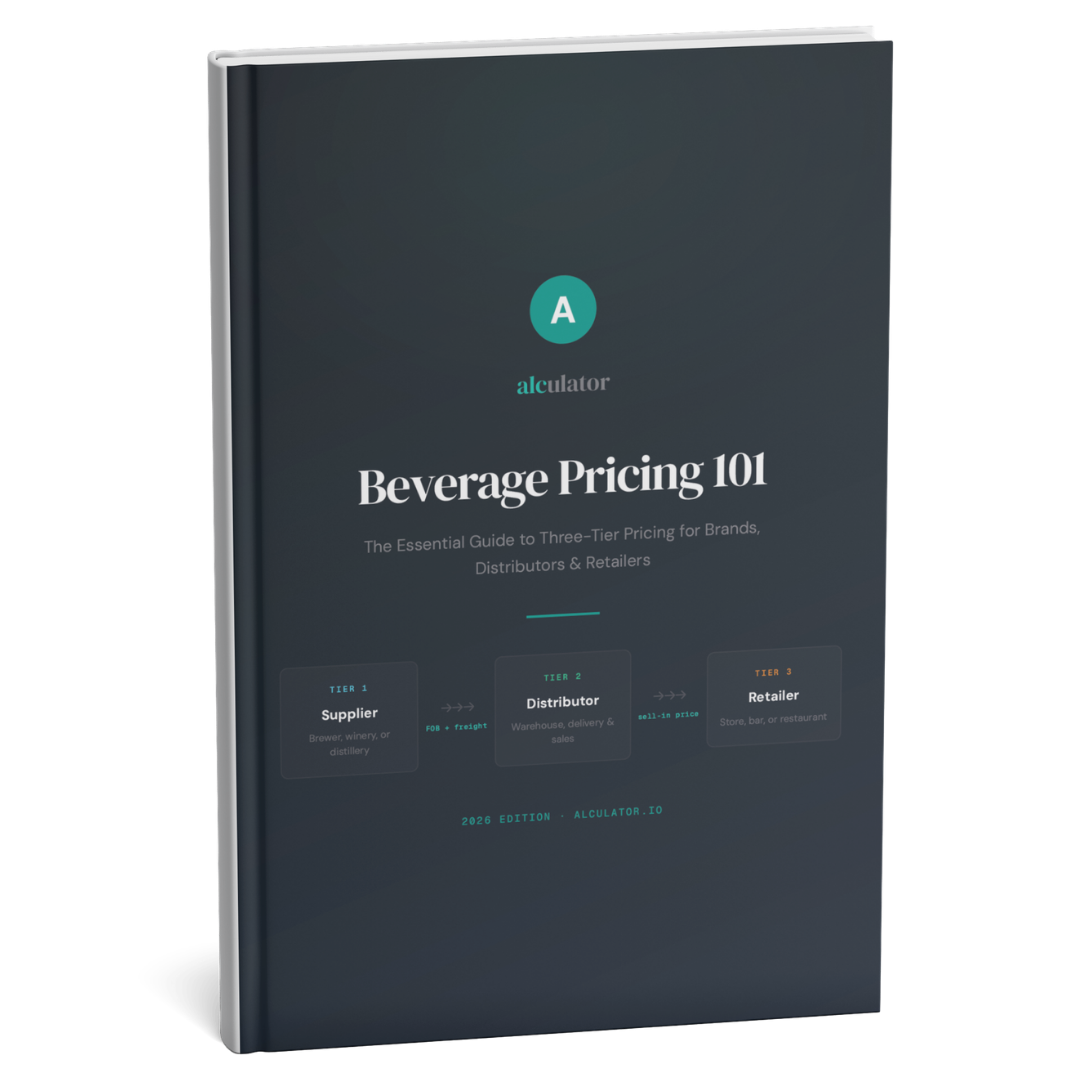
Beverage Pricing 101
The complete guide to three-tier pricing — margins, formulas, and benchmarks in one PDF.
No spam. Unsubscribe anytime.
Downloading your guide!
Cold chain challenges
Traditional kombucha must be kept refrigerated throughout the entire supply chain — from production to warehouse to delivery truck to retail cooler. Any break in the cold chain can trigger re-fermentation, alcohol spikes, over-carbonation, or off-flavors. This cold chain requirement is the single biggest cost and operational challenge for kombucha brands.
Cold chain cost impact
- Refrigerated warehousing — costs 40–60% more than ambient storage; $3.00–5.00 per pallet per week vs. $1.50–3.00
- Refrigerated freight — reefer trucks cost 25–40% more than dry freight; adds $1.50–4.00 per case
- Shrink and waste — temperature excursions, short-dated inventory, and retail spoilage can cause 5–12% product loss
- Distribution reach — cold chain limits your practical distribution radius unless you use regional co-packers or DTC with insulated packaging
Shelf Life Economics
Most raw kombucha has a shelf life of 60–90 days refrigerated. Compare this to shelf-stable beverages with 9–12 month shelf lives. Shorter shelf life increases the risk of unsold inventory, creates pressure to discount short-dated product, and limits how far ahead you can produce. Many brands lose 8–15% of production to short-dated waste in their first year.
Retail strategy
Kombucha lives in the refrigerated section, which means competing for a fundamentally different type of shelf space than ambient beverages. Cooler space is more limited, more expensive, and more competitive than dry shelf space.
Where kombucha is merchandised
- Natural grocery (Whole Foods, Sprouts) — dedicated kombucha sets, often 8–16 feet; highest velocity and best margins
- Mainstream grocery (Kroger, Safeway) — typically 4–8 feet in the natural/organic cooler section; growing but competitive
- Convenience stores — limited presence; usually 1–2 SKU positions in the grab-and-go cooler
- Foodservice / on-premise — cafes, juice bars, yoga studios, and health-focused restaurants
Retailer margins on kombucha are typically 35–45% — higher than conventional beverages because the product commands premium pricing and occupies valuable cooler real estate. Brands must deliver consistent velocity to justify the space allocation.
Alcohol compliance
Kombucha’s natural fermentation process produces alcohol. Non-alcoholic kombucha must contain less than 0.5% ABV to avoid TTB regulation and alcohol distribution requirements. Managing this threshold is one of the most technically challenging aspects of kombucha production.
Compliance approaches
- Controlled fermentation — halt fermentation at target ABV through pasteurization or cold crashing
- De-alcoholization — remove alcohol through reverse osmosis or vacuum distillation after fermentation
- Re-dosing probiotics — pasteurize the base liquid and add shelf-stable probiotic strains back in (the probiotic soda approach)
- Hard kombucha — embrace the alcohol, extend fermentation, and distribute through the three-tier alcohol system
Strategic Decision
Hard kombucha (4–8% ABV) operates under completely different distribution economics. It must go through licensed distributors, pay excise taxes, and comply with state alcohol regulations — but it gains access to the profitable beer cooler in liquor stores and grocery chains. The margin trade-off is significant: higher distribution costs but access to larger, higher-velocity shelf sets.
Growth strategies
The kombucha and probiotic beverage category rewards brands that solve the cold chain problem, build velocity in the right channels, and price for sustainable margins. Here are the strategies driving growth in the category.
Expand format options
Beyond the traditional 16 oz glass bottle, successful brands offer multi-packs (4-packs and 6-packs of 12 oz cans), probiotic shots (2 oz, premium pricing), and on-tap draft kombucha for foodservice accounts. Each format targets a different occasion and consumer, broadening your addressable market.
Solve the shelf life problem
Brands that extend shelf life through high-pressure processing (HPP), UV treatment, or shelf-stable probiotic formulations gain a massive distribution advantage. Shelf-stable probiotic beverages can access ambient shelf sets in every channel, including convenience and vending — the highest-velocity channels in beverages.
Build your DTC channel
Kombucha’s premium price point and passionate consumer base make it well-suited for DTC sales. Subscription models generate predictable revenue, direct consumer relationships, and significantly higher margins than wholesale. Insulated shipping adds $4–8 per order but is offset by the 50–65% margin improvement over three-tier distribution.
Use the Alculator calculator to model how different COGS structures, cold chain costs, and distribution margins flow through to your retail shelf price across both wholesale and DTC channels.
Ready to price your kombucha line?
Model your full product lineup across retail and DTC channels with the free calculator.
Open the Calculator →