Fundamentals
How tariffs reshape your pricing stack.
From aluminum cans to imported spirits, tariffs ripple through every tier of the supply chain. Here's how to account for them — and protect your margins.
From aluminum cans to imported spirits, tariffs ripple through every tier of the supply chain. Here's how to account for them — and protect your margins.
Tariffs are one of the most disruptive — and least understood — forces in beverage pricing. Unlike excise taxes, which are relatively stable and predictable, tariffs can shift overnight based on trade policy, creating sudden cost shocks that ripple through every tier of the distribution chain. In 2025–2026, the beverage industry is experiencing exactly this: a wave of new and increased tariffs on aluminum, glass, and imported finished goods that is forcing brands to rethink their entire pricing architecture.
A tariff is a tax imposed by a government on goods imported from another country. For the beverage industry, tariffs come in two primary forms: material tariffs on the raw inputs used to make and package beverages, and product tariffs on finished beverages imported from foreign producers.
It is critical to distinguish tariffs from excise taxes. Excise taxes are levied on domestic production and imports alike — every barrel of beer brewed in the U.S. or imported pays a federal excise tax. Tariffs, by contrast, apply only to imported goods and are designed as trade policy tools. Both affect your cost structure, but they hit at different points and are managed by different agencies.
Excise taxes are per-unit taxes on production or importation (e.g., $3.50 per barrel for small brewers). Tariffs are percentage-based or flat-rate taxes on imported goods only (e.g., 25% on aluminum sheet). Both increase your landed cost, but tariffs are far more volatile — they can change with a single executive order. For a deeper look at excise taxes, see our Excise Tax guide.
The current tariff environment is particularly challenging for beverage producers. Key developments include:
The net effect is that virtually every beverage producer is paying more for materials, and every importer is paying more to bring product into the U.S. — whether or not they realize the full extent of the impact.
The most insidious thing about tariffs is that they compound. A tariff on aluminum increases your can cost, which increases your COGS, which increases the FOB you need to charge, which gets multiplied by distributor and retailer margins. A $0.03 increase per can becomes a $0.15–$0.25 increase at shelf.
Here is how a 25% aluminum tariff flows through the pricing stack for a typical 6×4 case of canned seltzer (24 cans):
| Cost Component | Before Tariff | After 25% Aluminum Tariff | Impact |
|---|---|---|---|
| Can cost (per unit) | $0.10 | $0.13 | +$0.03 |
| Can cost (24-ct case) | $2.40 | $3.12 | +$0.72 |
| FOB per case | $80.00 | $80.72 | +$0.72 |
| Distributor sell-in (30% margin) | $114.29 | $115.31 | +$1.03 |
| Shelf price per 4-pack (35% margin) | $29.30 | $29.57 | +$0.27 |
A three-cent increase per can becomes a twenty-seven-cent increase per 4-pack at shelf. For a brand selling 50,000 cases annually, the tariff represents $36,000 in additional cost that must be absorbed, passed through, or mitigated.
Aluminum tariffs don't just affect can prices. They also increase the cost of aluminum bottle caps, shrink-wrap trays, and pallet materials. The secondary packaging impact can add another $0.10–$0.30 per case on top of the primary can cost increase.
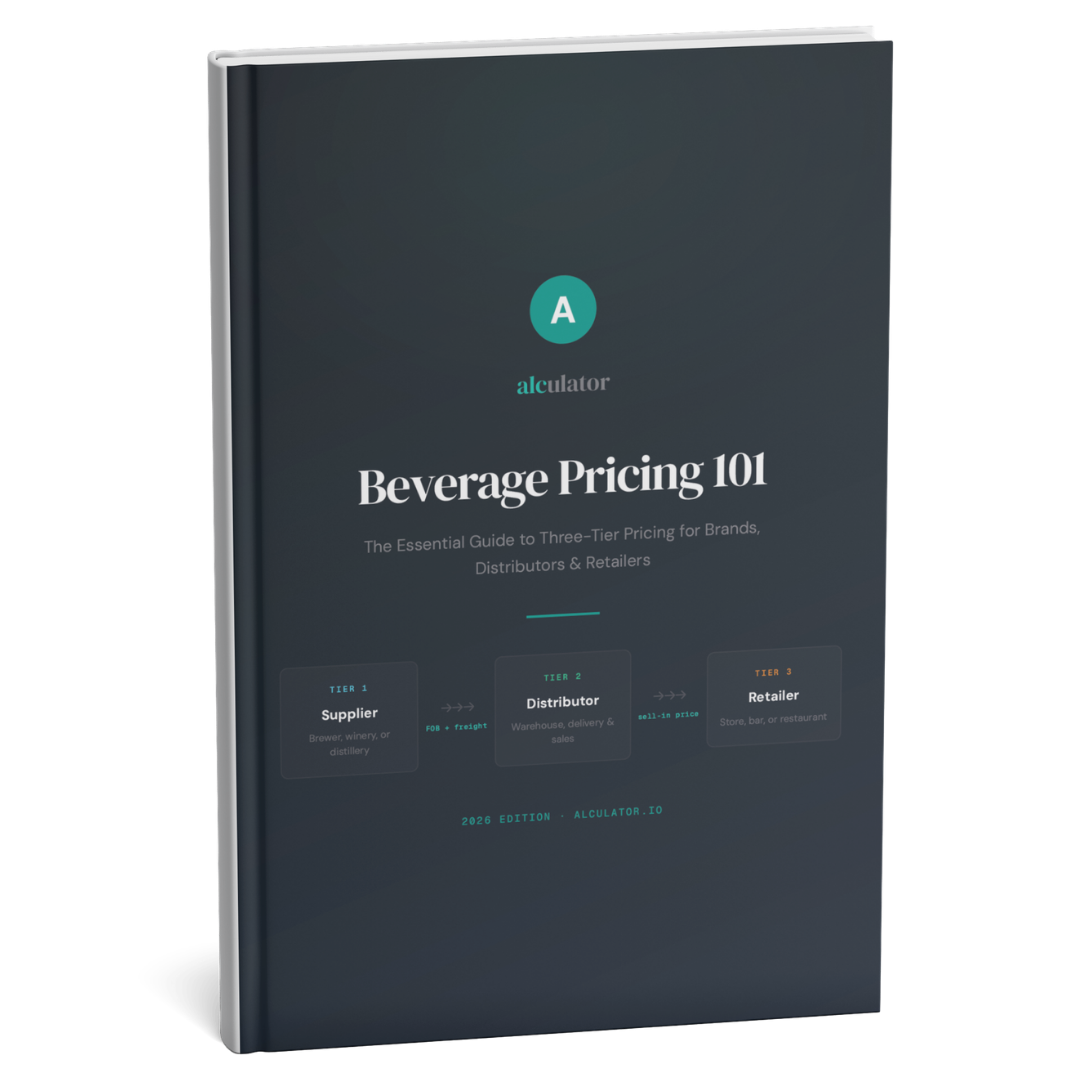
The complete guide to three-tier pricing — margins, formulas, and benchmarks in one PDF.
No spam. Unsubscribe anytime.
If you import finished beverages into the United States, your tariff exposure goes beyond materials. Every product entering the country is classified under a Harmonized System (HS) code, and the duty rate is determined by that classification. Getting your HS code right is essential — the wrong classification can mean overpaying by thousands of dollars per shipment, or underpaying and facing penalties.
| HS Chapter | Category | Typical Duty Rate |
|---|---|---|
| 22.03 | Beer and malt beverages | $0.01–$0.02 per liter |
| 22.04 | Wine (grape-based) | $0.05–$0.63 per liter (varies by alcohol content) |
| 22.05 | Vermouth and fortified wines | $0.04–$0.26 per liter |
| 22.06 | Other fermented beverages (cider, sake, mead) | $0.01–$0.04 per liter |
| 22.08 | Spirits and liqueurs | Free–$2.35 per proof liter (varies by origin) |
These base duty rates may be supplemented by additional tariffs depending on the country of origin, current trade agreements, and any retaliatory or protective tariffs in effect. A Mexican tequila, a Scottish whisky, and an Australian wine may all face different total duty loads despite similar retail price points.
For brands importing more than occasional shipments, a licensed customs broker is not optional — it is essential. A good broker ensures correct HS classification, manages duty drawback opportunities (refunds on re-exported goods), and keeps you compliant with changing tariff schedules. Budget $150–$300 per shipment for brokerage fees, which is trivial compared to the cost of misclassification.
When tariffs increase your costs, you have three fundamental options. The right choice depends on your competitive position, margin structure, and how long you expect the tariff to remain in place.
| Strategy | How It Works | Best When | Risk |
|---|---|---|---|
| Full pass-through | Increase FOB by the full tariff cost | Strong brand, inelastic demand, competitors also raising | Volume loss if competitors absorb |
| Full absorption | Absorb all tariff costs, hold FOB steady | Highly competitive market, new brand building velocity | Margin erosion, unsustainable long-term |
| Shared absorption | Split the increase with distribution partners | Established relationships, temporary tariff expected | Complex negotiation, partner fatigue |
When communicating a tariff-driven price increase to distributors, lead with data. Show the specific tariff, the per-case cost impact, and the percentage increase you are requesting. Distributors deal with dozens of suppliers raising prices — the brands that provide clear, honest math get the smoothest approvals. Use Alculator's forward pricing mode to model the impact before the conversation.
If you decide to pass through tariff costs, timing matters. The best windows for price increases in the beverage industry are January (new year, new budgets), just before peak season (when demand is strongest and retailers are less resistant), and when competitors move first (giving you cover). Avoid raising prices during slow seasons when distributors and retailers are already under volume pressure.
Consider also whether the tariff is likely to be permanent or temporary. If trade negotiations suggest the tariff may be reversed within 6–12 months, absorbing the cost short-term may be wiser than raising FOB and then having to lower it — price decreases are operationally difficult and signal instability to partners. For more on FOB pricing strategy, see our dedicated guide.
Beyond pricing strategy, there are operational moves you can make to reduce your tariff exposure and protect margins regardless of what trade policy does next.
If you source aluminum cans from a single supplier who imports sheet from a tariff-affected country, you are maximally exposed. Qualifying a second or third can supplier — ideally one using domestically sourced aluminum — gives you negotiating leverage and a fallback. The same logic applies to glass, closures, and specialty ingredients.
The 25% aluminum tariff has made the economic case for alternative packaging stronger than ever. Brands that were marginal on the can-vs-glass decision may find that glass bottles, PET plastic, or even Tetra Pak cartons now offer meaningful cost advantages. Run the numbers per unit, per case, and per pallet to understand the full landed cost impact before switching.
If your can supplier or co-packer offers fixed-price contracts for 6–12 months, consider locking in current pricing before anticipated tariff increases take effect. You will pay a small premium for price certainty, but that premium is insurance against a much larger cost shock. This is especially valuable when tariff policy is uncertain and markets are pricing in potential increases.
The most resilient brands model their pricing stack under at least three tariff scenarios: current rates, a moderate increase (e.g., tariffs go up 10%), and a worst case (e.g., tariffs double). This scenario planning lets you identify your break-even points and decide in advance at what threshold you will raise prices, switch suppliers, or change packaging. Alculator's calculator makes it easy to model these scenarios side by side.
Open the calculator and adjust your COGS inputs to see how tariff-driven cost changes flow through to shelf price.
Open the Calculator →